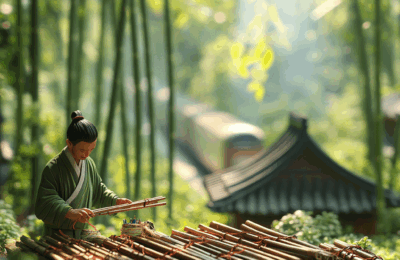
《声入江南》|竹笛· 杭州中泰· 杭黄高铁·富阳站

《声入江南》是一段关于中国竹笛的文化之旅。从杭州中泰的苦竹林出发,沿着杭黄高铁的诗意轨迹,奏响一场古今交汇的回响。从九千年前贾湖骨笛的初声,到《姑苏行》在江南水巷中的悠悠回荡;从中泰匠人代代相传的制笛工艺,到高铁带来的时代节奏—竹笛穿越历史与当下,在土地与人心之间发声。文章最后引入中医五音疗法,揭示竹笛不仅是传音之器,更是一种疗愈之力与文化回声。这不仅是对声音的记录,更是一种安静而深远的回应。让我们在竹音中听见中国,也让中国的声音,温柔地听见我们自己。这是一幅跨越文化、工艺、情感与医理的声音地图,也是一首由呼吸、气息与风骨铺展的东方诗篇。Voice into Jiangnan is a cultural journey of the Chinese bamboo flute. Beginning in the bitter-bamboo groves of Zhongtai, Hangzhou, it follows the poetic arc of the Hangzhou–Huangshan high-speed rail to sound a resonance where past meets present. From the first notes of the 9,000-year-old Jiahu bone flute to the lingering echoes of “Journey to Gusu” in Jiangnan’s water lanes; from the bamboo-flute craftsmanship handed down for generations in Zhongtai to the era’s tempo carried by high-speed rail—the flute speaks across history and the now, between the land and the human heart. The essay closes by introducing traditional Chinese medicine’s five-tone therapy, revealing that the bamboo flute is not only an instrument of transmission but also a power of healing and a cultural echo. This is more than a record of sound; it is a quiet, far-reaching reply. Let us hear China in the breath of bamboo—and let China’s voice, gently, hear us in return. It is a sound-map spanning culture, craft, feeling, and medical lore, and an Eastern poem unrolled by breath, qi, and spirit.
Weiterlesen《声入江南》|竹笛· 杭州中泰· 杭黄高铁·富阳站

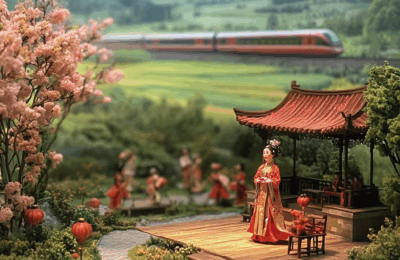
《一唱成双》|黄梅戏 |黄黄高铁 · 湖北黄梅 |合安九高铁 · 安徽安庆

黄梅戏,一种源于湖北山野的乡音,被安徽安庆锤炼成中国五大剧种。黄黄高铁自西而来,穿越黄梅东站,却略过了真正的县城与戏曲源头,仿佛命运里唱错的一笔。这一篇文章,追踪一段戏调的迁徙之旅:从采茶调的田间清唱,到安庆舞台上的百年大成,再到高铁时代的风声过耳与站名闪现。唱腔与车速交错,一声“黄梅”,跨越地理,也深植人心—这是高铁上的乡音地图,也是一段未曾停驻,却从未走远的文化回响。Huangmei opera—born as a rustic dialect of Hubei’s hills and honed in Anqing, Anhui into one of China’s five great operatic forms. The Huanggang–Huangmei high-speed line sweeps in from the west, passes through Huangmei East Station, yet skirts the true county seat and the art’s original wellspring—as if fate had sung a wrong note. This essay traces the migration of a melody: from the fieldside cai-cha-diao tea-picking tunes, to a century of consummation on Anqing’s stages, and onward to an age when the wind of high-speed trains rushes past and station names flicker by. Vocal lines and train speed intersect; one cry of “Huangmei” crosses geography and takes root in the heart. It is a map of hometown sound drawn upon the rails—and a cultural echo that never made a full stop, yet has never gone far.

Weiterlesen《一唱成双》|黄梅戏 |黄黄高铁 · 湖北黄梅 |合安九高铁 · 安徽安庆

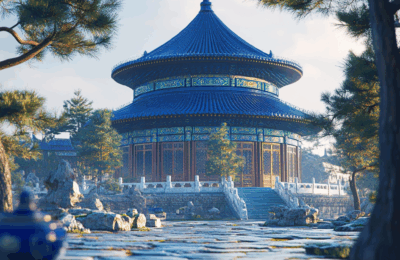
《天光琉影》|琉璃蓝 · 天坛祈年殿 · 京沪高铁 · 北京

从《说文解字》里“蓝”的本义出发,追踪一抹琉璃蓝的历史旅程:它曾燃烧在琉璃厂的烈火中,凝结为天坛祈年殿的神圣穹顶。如今,京沪高铁飞驰而至,北京以高铁速度连接起传统与现代。本文以诗意的笔触,描绘颜色、建筑与速度的文化交响,让一抹蓝色穿越千年,定格于天光之上。Starting from the original meaning of “blue” in the Shuowen Jiezi, this piece traces the historical journey of a glaze-blue hue: once aflame in the fiery kilns of Liulichang, it set into the sacred dome of the Hall of Prayer for Good Harvests at the Temple of Heaven. Today, the Beijing–Shanghai high-speed rail arrives in a blur, linking Beijing’s tradition and modernity at the pace of steel. With a lyrical touch, the essay composes a cultural symphony of color, architecture, and speed—letting a single stroke of blue cross a thousand years and come to rest upon the vault of daylight.

Weiterlesen《天光琉影》|琉璃蓝 · 天坛祈年殿 · 京沪高铁 · 北京